BRMC Little Lights Curriculum
At BRMC Little Lights Preschool, we believe that learning should be joyful, meaningful, and rooted in real-world experiences. Guided by the MOE Nurturing Early Learners (NEL) Framework, the ECDA Early Years Development Framework (EYDF), Inquiry-Based Learning, and the IB Primary Years Programme (PYP), our curriculum and pedagogy work hand in hand to nurture children into joyful learners, compassionate individuals, and courageous thinkers.
Together, these approaches provide a strong foundation for holistic development—intellectual, social, emotional, physical, and moral—while shaping both the mind and the heart.
Nurturing Early Learners (NEL)
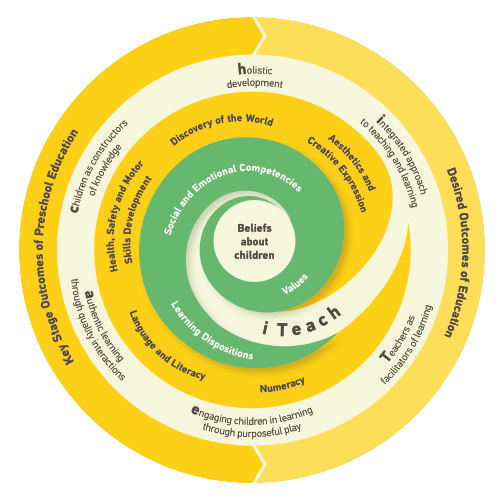
A curriculum framework for kindergartens in Singapore, the NEL Framework was published by the Ministry of Education (MOE) in 2012 to guide preschool teachers in designing and implementing a quality kindergarten curriculum for children aged four to six.
The
NEL Framework aims to build the foundation for children to achieve the desired outcomes of education and key stage outcomes by helping them acquire knowledge, skills and dispositions through six learning areas (Aesthetics and Creative Expression, Discovery of the World, Language and Literacy, Motor Skills Development, Numeracy and Social and Emotional Development) as well as six learning dispositions (Perseverance, Reflectiveness, Appreciation, Inventiveness, Sense of wonder and curiosity and Engagement). The core of the NEL Framework focuses on the child and highlights the belief that children are curious, active and competent learners.
Curriculum Highlights
Our curriculum blends complementary approaches to support children’s growth through inquiry, play, and exploration.
Inquiry-Based Learning
Encourages curiosity, questioning, investigation, and reflection. Children explore real-world ideas, make connections, and take ownership of their learning.
IB Primary Years Programme (PYP)
Strengthens conceptual understanding, student agency, and transdisciplinary learning through globally significant themes. Children learn to apply knowledge meaningfully to the world.

Where we are in
place and time
How we organise ourselves
How we express ourselves
How the world works
Sharing the planet
Who we are
Each transdisciplinary theme is developed with a Central Idea by reflecting on the students’ interests, questions and ideas. The Central Idea is connected to the lines of inquiry and concepts that encourage the inquiry learning process among the students. Being active learners, students learn new concepts through exploration, making inquiries and hypotheses. The Central Idea enables the students, teachers and community to have a voice, choice and ownership in the inquiry learning process. Opportunities are provided for the students to use their knowledge, concepts, skills, attitudes and actions in each Central Idea inquiry. Academic skills and other learning domains and dispositions are mapped to NEL to ensure that our students are ready for Primary One.
Montessori Approach
Fosters independence, focus, and self-directed discovery in a thoughtfully prepared environment, building confidence and intrinsic motivation.
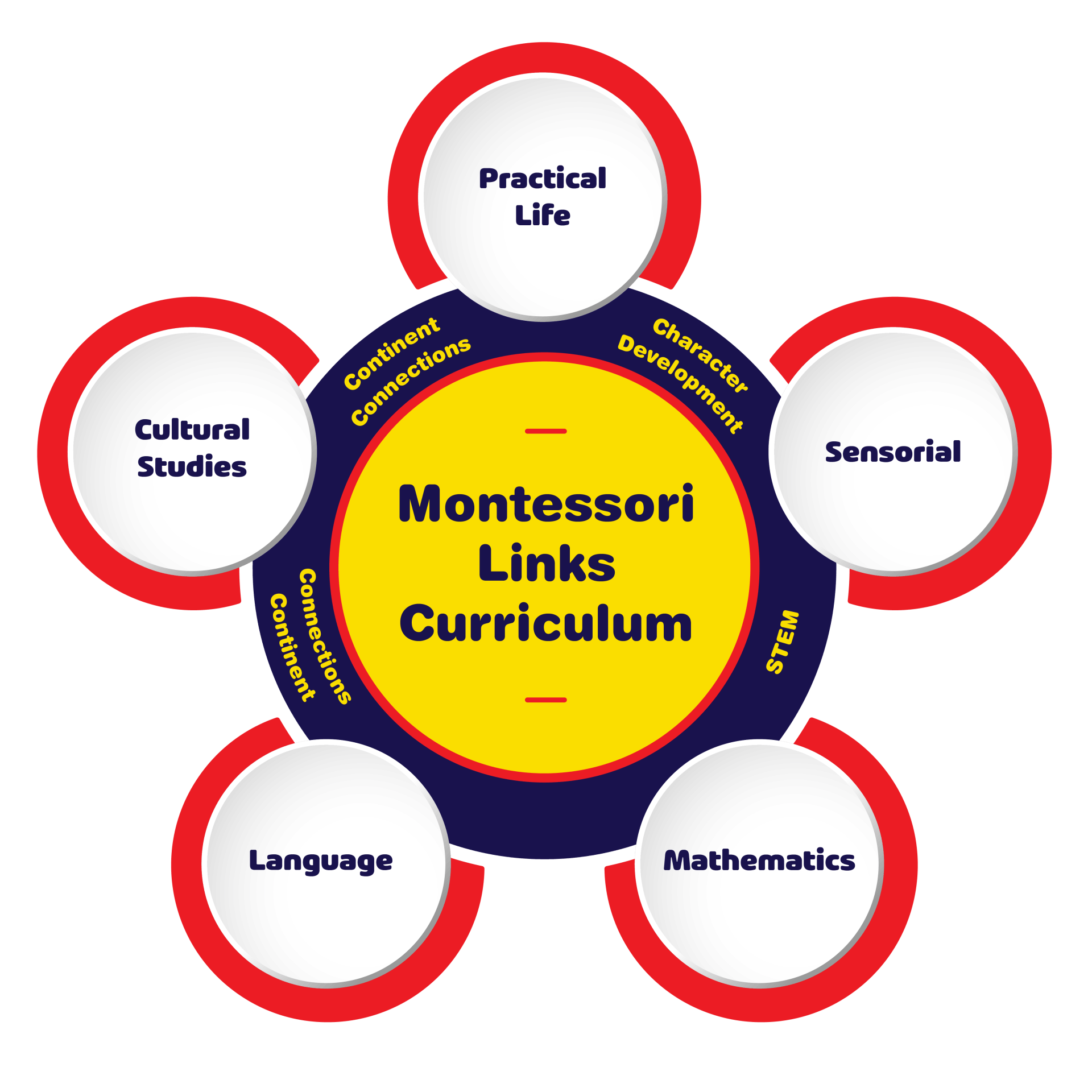
5 main subject areas
Practical Life
Includes life skills to help develop independence, coordination, concentration, self-control, self-awareness, and confidence.
Sensorial
Allows the child to refine each of their senses and develop fine motor skills, visual and auditory senses, as well as the ability to order and classify.
Cultural Studies
Lets the child explore the natural world around them, which includes studying Geography, Zoology, Botany, History, and Science.
Mathematics
Preparation starts with the sensorial area, using hands-on learning materials. Each exercise builds upon another and the child gradually moves from concrete to abstract areas such as place value, addition, subtraction, multiplication, and fractions.
Language
Based on phonetic awareness, Language is not an isolated topic but runs through the curriculum. The spoken language is the foundation for writing, and then reading.
Chinese Immersion -
Creative Chinese Learning Programme
Brings language and culture alive through stories, music, play, and daily interactions, nurturing natural Mandarin acquisition and cultural appreciation.
Character Building Programme
Grounded in biblical values, it cultivates empathy, kindness, integrity, courage, and compassion to guide children’s relationships and decisions.
Learning Beyond the Classroom
Extends learning into nature, home, and community through outdoor exploration,
family partnerships, and community engagement.